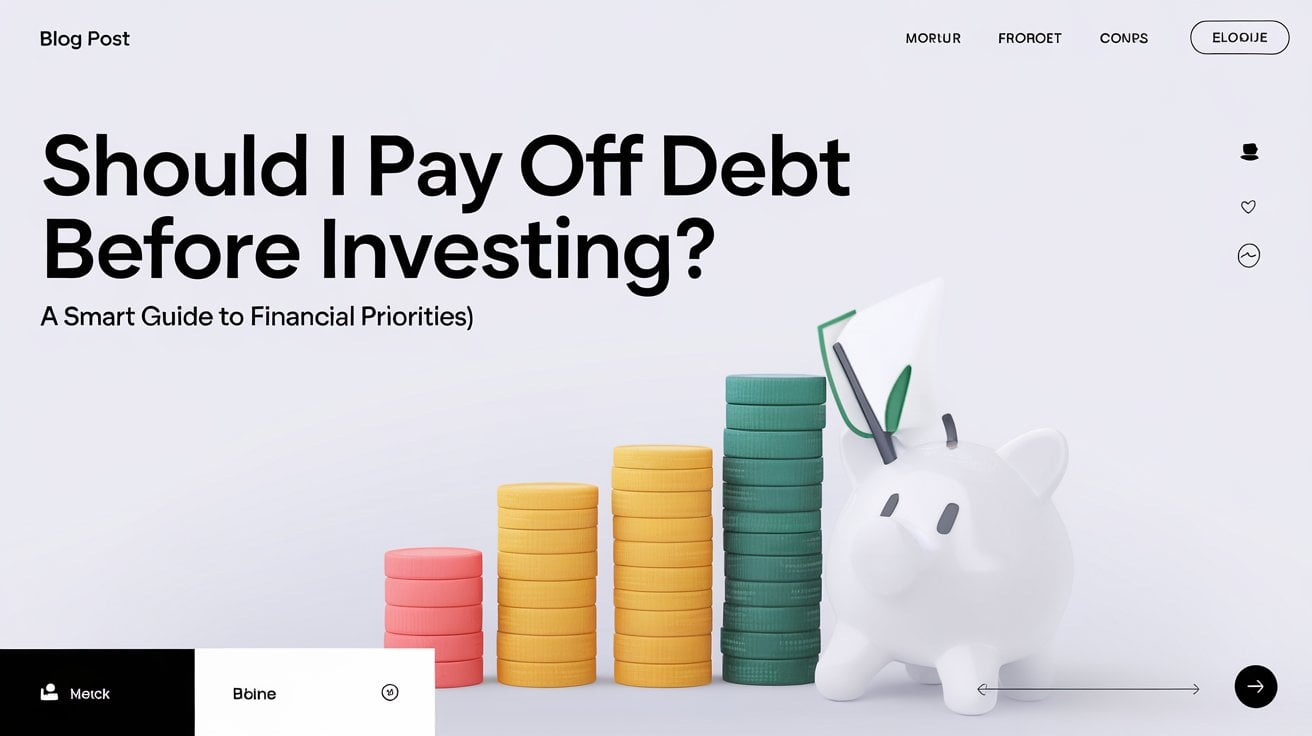
Should I Pay Off Debt Before Investing? A Smart Guide to Financial Priorities
Deciding whether to pay off debt or start investing is one of the most common financial dilemmas. On one hand, eliminating debt reduces stress and interest payments. On the other, investing early harnesses the power of compounding, helping you grow wealth over time. So, which path should you take? This article explores strategies, risks, and practical solutions to help you make a financially sound choice.
Understanding Different Types of Debt
Before deciding whether to invest or pay off debt, it’s essential to understand the kind of debt you have.
- High-Interest Debt: Credit cards and payday loans often carry interest rates above 15–20%. The longer they remain unpaid, the more they grow, sometimes faster than potential investment returns.
- Low-Interest Debt: Student loans, mortgages, or auto loans typically have lower rates, often below 6–7%. This type of debt is less urgent to pay off quickly, as investment returns may outpace these interest costs.
Knowing your debt types helps prioritize repayment and assess whether investing while carrying debt makes sense.
The Case for Paying Off Debt First
Paying off debt before investing has several advantages:
- Guaranteed Returns: Every dollar used to pay off a high-interest credit card is a guaranteed return equal to the interest rate. Paying off 20% APR debt is like earning a 20% investment return.
- Financial Relief: Eliminating debt reduces monthly obligations and frees up money for future investments.
- Reduced Risk: Debt increases financial vulnerability. Without obligations, your financial stress diminishes, making your investment journey smoother.
For instance, if you have $5,000 in credit card debt at 18% APR, paying it off could save you around $900 in interest annually—a return many investments cannot match.
The Case for Investing While in Debt
Investing while carrying low-interest debt is an alternative strategy that can pay off in the long run.
- Compound Growth: Money invested early grows exponentially over time. A $1,000 investment earning 7% annually becomes approximately $2,000 in 10 years.
- Employer Matching: Many companies offer 401k matching, which is essentially free money. Missing out on this could outweigh debt interest costs, especially if the debt is low-interest.
- Diversification: Balancing debt repayment with investing diversifies your financial strategy, preparing you for both emergencies and future growth.
If your student loan carries a 4% interest rate, investing in a stock index fund averaging 7–8% returns may yield higher net gains over time.
Evaluating Your Personal Financial Situation
Before making a decision, assess your financial landscape. Consider:
- Debt Amount and Interest Rates: High-interest debts generally require immediate attention, whereas low-interest debts may allow room for investing.
- Emergency Fund: A safety net of 3–6 months of expenses prevents unexpected costs from pushing you deeper into debt.
- Income Stability: Job security and cash flow impact your ability to balance debt payments and investments.
- Risk Tolerance: Those uncomfortable with financial risk may prioritize debt repayment for peace of mind.
A simple rule: If your debt interest rate exceeds expected investment returns, focus on debt. Otherwise, consider a split approach.
Strategies for Balancing Debt Repayment and Investing
A hybrid approach allows you to both reduce debt and grow investments:
- Split Contributions: Allocate a percentage of income to debt repayment and another to investing.
- Focus on High-Interest Debt First: Pay minimum on low-interest loans while attacking high-interest balances.
- Gradual Increase in Investments: As debt decreases, redirect more funds to investing.
For example, you could use 60% of extra funds to pay off a credit card and 40% to invest in a retirement account, gradually adjusting as your debt shrinks.
Debt Snowball vs. Avalanche: Which Works Best?
Two popular debt repayment strategies can complement your investing efforts:
- Debt Snowball: Pay off the smallest debts first for psychological wins. Motivation from seeing debts eliminated can encourage continued progress.
- Debt Avalanche: Target debts with the highest interest rates first, saving more money on interest in the long run.
The best method depends on your financial goals and psychology. Snowball works well for motivation, while avalanche is mathematically optimal for saving money.
Tax Considerations and Investment Advantages
Taxes can influence the debt vs. investing decision:
- Retirement Accounts: Contributions to 401k or IRA may be tax-deductible, reducing taxable income while building wealth.
- Interest Deductions: Some student loan and mortgage interest payments are deductible, slightly lowering the cost of debt.
- Long-Term Gains: Tax-advantaged investment accounts can significantly boost wealth over time, sometimes outweighing debt repayment benefits for low-interest loans.
Understanding tax implications helps make informed choices between investing and paying off debt.
Emergency Fund and Financial Safety Net
Maintaining an emergency fund is crucial:
- Protection Against Unexpected Expenses: Prevents incurring new debt if emergencies arise.
- Supports a Balanced Approach: Allows simultaneous investing and debt repayment without risking financial instability.
Aim for at least 3–6 months of expenses in a savings account or liquid investment, ensuring peace of mind while pursuing long-term financial goals.
Psychological Benefits of Paying Off Debt
Beyond numbers, paying off debt has emotional advantages:
- Reduces Stress: Eliminating debt obligations lightens financial burdens and improves mental well-being.
- Encourages Discipline: Successful repayment builds habits that also benefit investing strategies.
- Sense of Achievement: Clearing a debt can motivate continued investment and financial planning.
Studies show that financial stress can negatively impact health and decision-making, so reducing debt has benefits beyond just money saved.
When Investing First Might Be Smart
There are scenarios where investing first can be advantageous:
- Low-Interest Debt: Mortgages or student loans with interest rates below potential investment returns.
- Employer Matching Programs: Missing out on 401k matching contributions can be more costly than paying off low-interest debt.
- Younger Investors: Time horizon allows compounding to outweigh debt interest costs, maximizing long-term growth.
Investing early, even while carrying manageable debt, can create substantial wealth over decades.
Creating a Personalized Plan
Personalized strategies ensure the right balance:
- Assess Debt and Investment Goals: Quantify both short-term and long-term targets.
- Allocate Funds Wisely: Determine percentages for debt repayment, investing, and emergency savings.
- Review Regularly: Adjust strategy annually or as life circumstances change.
Example: With $10,000 in debt at 6% and $200 per month to invest, allocate $120 to debt and $80 to a retirement fund, increasing investment contributions as debt decreases.
Understanding Opportunity Cost: Debt vs. Investing
Opportunity cost measures what you give up by choosing one option over another. Paying off debt with a 5% interest rate versus investing in a stock market averaging 7% growth illustrates potential gains lost if you focus solely on debt. Consider both immediate relief from debt and long-term wealth growth.
Using Windfalls Wisely
Tax refunds, bonuses, or unexpected money can be strategically split between debt repayment and investing. For example, use 50% to pay down high-interest debt and 50% to invest in a retirement account. Windfalls accelerate progress without straining monthly budgets.
The Role of Inflation in Your Decisions
Inflation decreases the real value of money over time, affecting both debt and investments. Fixed-rate debt becomes slightly cheaper in real terms during high inflation. Investing in assets that outpace inflation can preserve and grow wealth while slowly paying down manageable debt.
Automating Debt Repayment and Investments
Automating payments ensures consistent debt reduction and investment growth. Set up automatic transfers to investment accounts and automatic debt payments to avoid missed deadlines. Automation reduces the mental burden of managing finances while maintaining discipline.
Psychological Traps to Avoid
- Debt Aversion Bias: Over-prioritizing debt may delay potential investment gains unnecessarily.
- Investment Fear: Fear of market volatility may cause hesitation, while ignoring debt may cause stress.
Balance is key—acknowledge both emotional and financial aspects.
How Credit Scores Factor Into the Decision
Paying down debt can improve credit scores, reducing future borrowing costs. Good credit allows access to lower-interest loans, better mortgages, and favorable investment opportunities. Weigh potential credit score improvements against the benefits of early investing.
Emergency Debt Strategies
In case of sudden financial hardship, having a plan prevents worsening debt. Maintain a small, accessible fund for emergencies, separate from long-term investments. Ensure debt repayment doesn’t completely drain liquidity.
Long-Term Perspective: Balancing Life Goals
Life milestones such as buying a house, starting a family, or early retirement require both debt management and investing. Prioritize based on short-term needs versus long-term financial growth. Example: Aggressively pay off high-interest debt to free cash flow for a down payment, while investing a portion for retirement simultaneously.
Conclusion
Balancing debt repayment and investing is not a one-size-fits-all decision. Factors like interest rates, risk tolerance, personal goals, and market conditions all play a role. High-interest debts should be prioritized, while low-interest debts may allow simultaneous investing. By understanding opportunity costs, automating contributions, and maintaining emergency funds, you can build a strategy that ensures both financial security and wealth growth.
Take action today: review your debts, evaluate investment options, and create a personalized plan immediately. Monitor progress and adjust as your financial situation evolves to secure a better future.