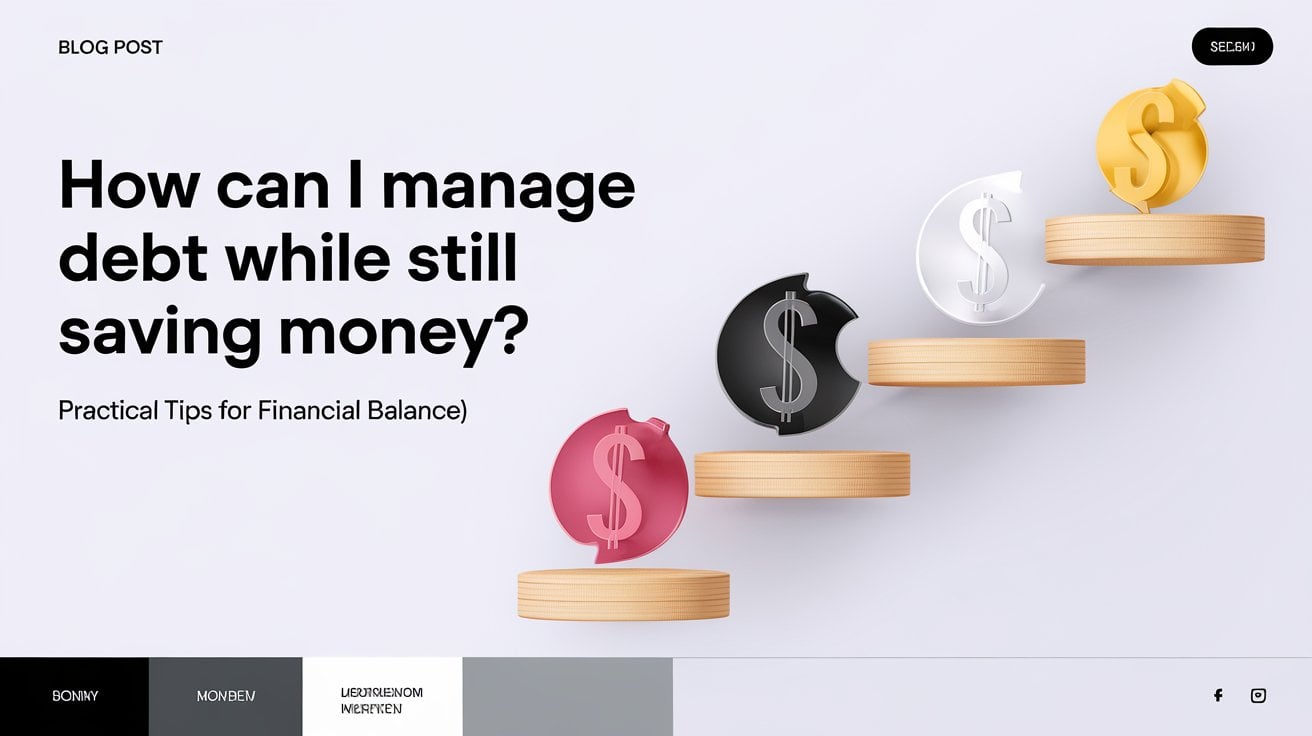
How Can I Manage Debt While Still Saving Money? Practical Tips for Financial Balance
Balancing debt repayment with building savings may feel like walking a tightrope. On one side is the pressure of monthly bills, and on the other, the desire for financial security. Many people assume they must choose between paying off debt or saving money—but the truth is, with a strategic approach, you can do both. This article will provide practical methods to manage debt while still saving money, offering a roadmap to financial stability and peace of mind.
Understanding Debt and Savings Balance
Before you can manage debt and savings simultaneously, it’s important to understand how they interact. Debt is often categorized as either essential or non-essential. Essential debt includes mortgages or student loans that help build your future, while non-essential debt, like high-interest credit cards, can spiral out of control.
On the savings side, having a safety net is crucial. Even a small emergency fund protects you from taking on more debt if an unexpected expense arises. Ignoring either debt or savings can destabilize your finances, making it harder to recover. According to a 2023 study, over 60% of adults struggle to balance debt and savings effectively, highlighting the importance of a structured approach.
Assessing Your Current Financial Situation
The first step to managing debt while saving is understanding your finances. Start by calculating:
- Total debt: List all your debts, interest rates, and minimum payments.
- Monthly income and expenses: Track your paycheck, bills, and discretionary spending.
- Discretionary income: Determine how much money you can allocate to both savings and debt repayment without stretching yourself too thin.
Tools like Mint, YNAB (You Need a Budget), or spreadsheets can make this process easier and provide a clear picture of your financial landscape.
Prioritizing Debt Repayment
Once you understand your finances, focus on prioritizing your debt. High-interest debts, such as credit cards or payday loans, should be tackled first because they grow the fastest. Low-interest debts, like federal student loans, can often be managed alongside savings without jeopardizing your financial health.
Two popular methods include:
- Debt Snowball: Pay off the smallest debts first to gain momentum.
- Debt Avalanche: Pay off debts with the highest interest rates first to save the most money on interest.
For example, paying off a $5,000 credit card at 20% interest is usually more urgent than a $10,000 student loan at 5% interest, even though the student loan amount is higher.
Creating a Balanced Budget
Budgeting is the backbone of debt management and savings. A balanced budget allocates a fixed percentage of income to debt repayment and savings each month. Popular approaches include:
- 50/30/20 rule: 50% needs, 30% wants, 20% savings/debt.
- 60/20/20 variation: 60% living expenses, 20% debt repayment, 20% savings.
Automating payments ensures you don’t miss deadlines, avoids late fees, and keeps you on track. Don’t forget to allocate a small amount for personal spending—it prevents burnout and keeps you motivated.
Building an Emergency Fund While Paying Debt
An emergency fund protects you from unexpected expenses that could derail your debt repayment plan. Start with a small fund of $500–$1,000. Even while paying down debt, gradually increase this fund until you have three to six months of living expenses saved. This prevents new debt from accumulating when unexpected emergencies, such as medical bills or car repairs, occur.
Reducing Expenses to Free Up Money
Cutting unnecessary expenses can accelerate debt repayment and savings simultaneously. Consider:
- Cutting discretionary spending: Dining out, subscriptions, or entertainment.
- Using coupons or cashback apps: Save on groceries and daily essentials.
- Negotiating bills: Internet, phone, and insurance providers often offer discounts if asked.
Studies suggest households can save 10–15% of monthly expenses by optimizing recurring bills and discretionary spending.
Increasing Income to Accelerate Progress
Increasing your income can create more room for debt repayment and savings. Options include:
- Side hustles: Freelancing, ridesharing, or online gigs.
- Selling unused items: Online marketplaces or garage sales.
- Overtime work: Allocate extra paychecks directly to savings or debt.
For instance, a $200 monthly side income can significantly reduce credit card debt faster while simultaneously building savings.
Avoiding New Debt During Repayment
Managing debt and savings effectively requires avoiding new debt. Strategies include:
- Stop using credit cards for non-essential purchases.
- Build a small buffer in savings to cover unexpected expenses.
- Use debit cards or cash for daily transactions to avoid overspending.
Focusing on a long-term mindset ensures you maintain financial flexibility and avoid repeating the cycle of debt.
Automating Savings and Debt Payments
Automation is key to consistent progress. Setting up automatic debt payments and automatic transfers to savings:
- Reduces the temptation to spend money elsewhere.
- Keeps you accountable.
- Provides a clear track record of progress.
Many banks and apps offer easy automation options, simplifying the process and reducing stress.
Monitoring and Adjusting Your Plan
Your financial situation will change over time, so review your budget and repayment plan regularly:
- Track monthly spending and debt reductions.
- Adjust allocations as income or expenses change.
- Celebrate milestones, like paying off a credit card or reaching a savings goal.
Research shows that individuals who actively track spending are 30% more likely to achieve financial goals.
Combining Debt Reduction and Investment Opportunities
While debt repayment is crucial, consider low-risk investment options to grow your savings simultaneously. For example:
- Contribute to a 401(k) for employer match while paying off low-interest debt.
- Open a high-yield savings account for emergency funds.
Balancing debt interest rates with potential investment returns can maximize your overall financial growth.
Leveraging Financial Tools and Resources
Several tools and resources can help manage debt while saving:
- Credit counseling agencies: Offer structured repayment plans.
- Budgeting apps: Track income, expenses, and debt payments.
- Online calculators: Compare repayment strategies and interest savings.
- Financial education websites: Provide tips, courses, and tools for better decision-making.
Understanding Different Types of Debt
- Secured vs. unsecured debt: mortgages vs. credit cards.
- How interest rates differ and impact repayment strategies.
- Recognizing high-priority debt vs. manageable debt.
- Include examples: car loans vs. personal loans.
Setting Realistic Financial Goals
- Short-term goals: paying off one debt, saving $500.
- Medium-term goals: building 3–6 months of emergency savings.
- Long-term goals: becoming debt-free, planning for retirement.
- Use SMART goal framework (Specific, Measurable, Achievable, Relevant, Time-bound).
Utilizing Balance Transfer and Consolidation Options
- Balance transfer cards for high-interest credit cards.
- Debt consolidation loans to lower monthly payments.
- Pros and cons: lower interest vs. potential fees.
- How consolidation affects credit score.
Negotiating Lower Interest Rates
- Call creditors to request reduced rates.
- Leverage good payment history for discounts.
- Consider professional advice if necessary.
- Highlight potential savings from even 2–3% interest reduction.
Implementing Lifestyle Changes for Financial Health
- Cooking at home instead of eating out.
- Using public transportation or carpooling.
- Avoiding impulse purchases.
- How small daily changes accumulate over months.
Taking Advantage of Employer Benefits
- Retirement contributions and employer matching.
- Health Savings Accounts (HSA) or Flexible Spending Accounts (FSA).
- Financial wellness programs or counseling offered by employers.
- Example: employer 401(k) match can act as a “free” savings boost.
Staying Motivated During the Debt Repayment Journey
- Track progress visually (charts, apps).
- Celebrate milestones: each debt paid off or savings milestone reached.
- Join online communities for support and accountability.
- Positive reinforcement helps sustain consistent habits.
Preparing for Financial Setbacks
- Plan for job loss, unexpected medical bills, or car repairs.
- Maintain emergency fund and flexible budget allocation.
- Reassess debt and savings plan during major life changes.
- Importance of avoiding panic borrowing and staying disciplined.
Long-Term Benefits of Managing Debt and Savings Together
- Reduced financial stress: Peace of mind knowing you have control over money.
- Faster path to financial independence: Savings grow while debts shrink.
- Better credit score: Responsible management improves borrowing potential.
- Flexibility: Ability to handle unexpected expenses without falling back into debt.
Conclusion
Balancing debt repayment with saving money is achievable with discipline, planning, and the right strategies. Prioritizing high-interest debt, creating a realistic budget, cutting unnecessary expenses, increasing income, and automating payments can steadily move you toward financial freedom.
Call-to-Action: Start today. Assess your current debts and savings, set clear goals, and take consistent action. Every small step toward managing your debt and building savings brings you closer to financial stability and peace of mind.