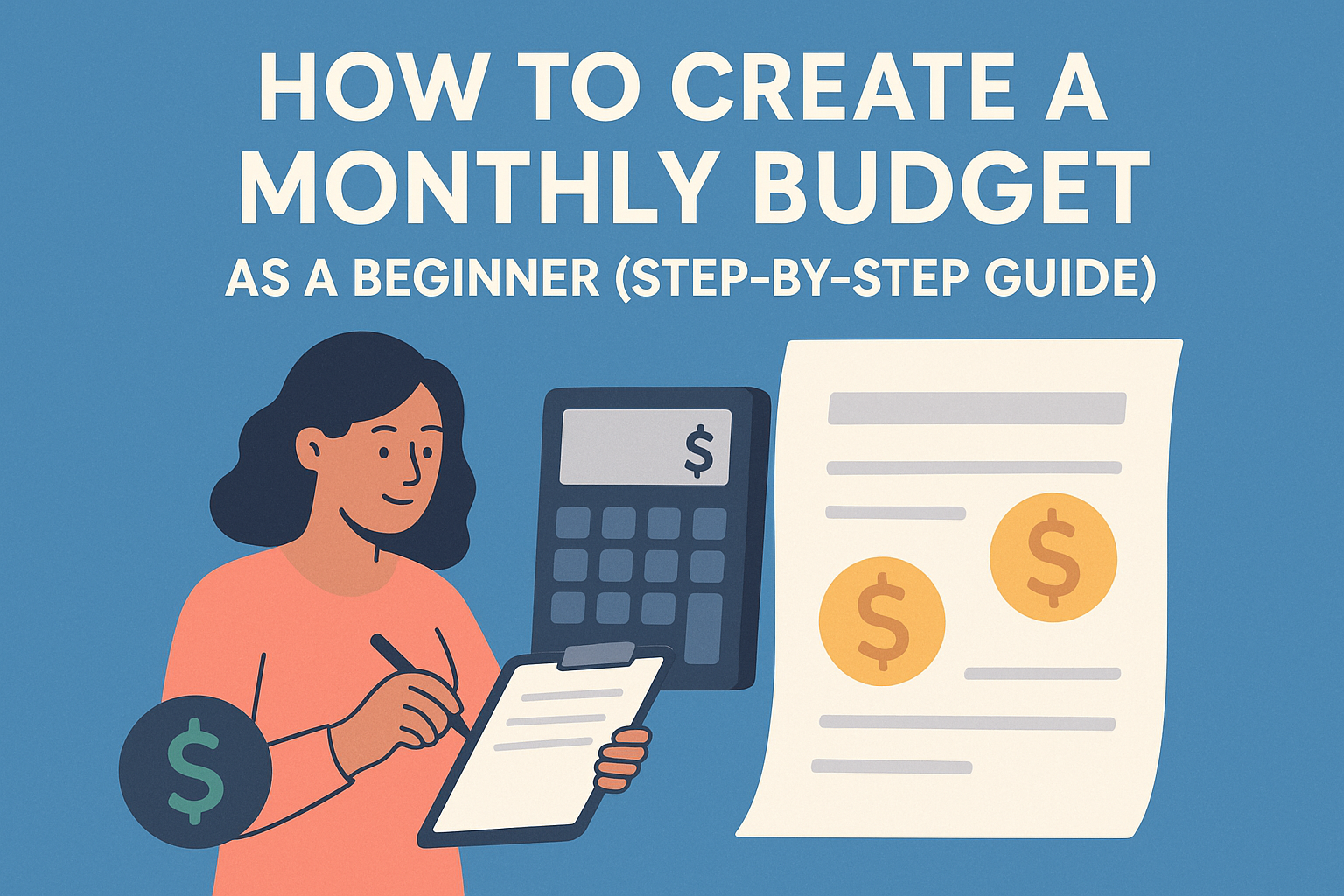
How to Create a Monthly Budget as a Beginner (Step-by-Step Guide)
If you’ve ever found yourself wondering, “Where did all my money go?” by the end of the month, you’re not alone. According to a 2023 survey by Lending Club, 64% of Americans live paycheck to paycheck, even among higher-income households. That statistic might feel discouraging, but here’s the good news: creating a monthly budget is the first step toward taking control of your money—and it’s simpler than you think.
A budget is not about restriction; it’s about giving your money a purpose. Whether you want to pay off debt, save for a big purchase, or simply stop stressing over bills, learning how to create a monthly budget as a beginner can transform your financial future.
In this guide, we’ll walk step by step through how to set up your first budget, choose a method that fits your lifestyle, avoid common mistakes, and stick with it. By the end, you’ll have the tools you need to confidently manage your income and expenses without feeling overwhelmed.
What Is a Monthly Budget and Why Do You Need One?
A monthly budget is a simple plan for how you’ll spend and save your money each month. Think of it as a roadmap that ensures every dollar you earn is working toward your priorities instead of slipping away unnoticed.
Benefits of Having a Budget
- Clarity and awareness – You know exactly where your money is going.
- Reduced stress – No more wondering if you’ll have enough for bills.
- Financial growth – Budgets help you save consistently and pay down debt faster.
- Better decision-making – You’ll make spending choices that align with your goals.
Without a budget, it’s easy to overspend on “wants” while underfunding “needs” and savings. A clear budget empowers you to flip that balance and build financial security—even on a modest income.
Step 1: Track Your Income
Before you can plan your spending, you need to know what’s coming in. Start by writing down all your sources of monthly income, including:
- Salary or hourly wages (after taxes)
- Side hustles or freelance work
- Business income
- Benefits (child support, alimony, government assistance)
Tip: Use pay stubs, bank statements, or direct deposit records for accuracy. Beginners often forget to account for irregular income like tips or commissions. If your income varies, use your average over the past three months as a baseline.
Remember, your net income (take-home pay) is what matters—not your gross income. That’s the money you actually have available to spend and save.
Step 2: List All Monthly Expenses
Once you know how much money you bring in, the next step is to figure out where it goes. Expenses generally fall into two categories:
1. Fixed Expenses (easy to predict)
- Rent or mortgage
- Utilities
- Car payments
- Insurance premiums
- Subscriptions (Netflix, gym, etc.)
2. Variable Expenses (change month to month)
- Groceries
- Gas or transportation
- Dining out
- Entertainment
- Clothing or personal care
Pro tip for beginners: Review your last 2–3 months of bank or credit card statements. This will give you a realistic view of your spending patterns and help you avoid underestimating.
Also, don’t forget irregular expenses like annual insurance premiums, car repairs, or holiday shopping. A good trick is to divide these yearly costs by 12 and add them to your monthly budget as a “sinking fund.”
Step 3: Choose a Budgeting Method That Works for You
Budgeting is not one-size-fits-all. As a beginner, experiment with different styles until you find one that feels manageable.
1. The 50/30/20 Rule
- 50% Needs – housing, utilities, groceries, transportation
- 30% Wants – dining out, entertainment, hobbies
- 20% Savings/Debt repayment – emergency fund, retirement, extra loan payments
✅ Best for: Beginners who want a simple, balanced approach without detailed tracking.
2. Zero-Based Budgeting
Every dollar you earn gets a job—whether it’s paying bills, building savings, or covering fun. At the end of the month, your income minus expenses should equal zero (not because you’re broke, but because you’ve allocated every cent).
✅ Best for: People who want maximum control and accountability.
3. Envelope or Cash Stuffing Method
You put physical cash into envelopes labeled for categories like groceries, gas, or dining out. When the envelope is empty, you stop spending in that category.
✅ Best for: Visual learners or anyone who struggles with overspending using cards.
Step 4: Set Realistic Financial Goals
Budgeting is much easier when you know why you’re doing it. Setting clear goals keeps you motivated.
Short-Term Goals (1–2 years)
- Save $1,000 for an emergency fund
- Pay off a credit card balance
- Save for a vacation
Long-Term Goals (5+ years)
- Buy a home
- Build retirement savings
- Pay off student loans
Use the SMART method when setting goals:
- Specific – “Save $5,000 for an emergency fund”
- Measurable – Track monthly contributions
- Achievable – Break large goals into smaller steps
- Relevant – Align with your lifestyle priorities
- Time-bound – Set a deadline (e.g., 12 months)
Step 5: Track Your Spending & Adjust as Needed
Creating a budget is just the first step—sticking to it is where the magic happens.
Tools for Tracking Spending
- Budgeting apps: Mint, YNAB (You Need A Budget), EveryDollar
- Banking apps: Many banks now provide spending breakdowns
- Spreadsheets: Google Sheets or Excel for DIYers
- Paper planners: Great for those who prefer a tactile approach
The key is to review your budget regularly. Check in weekly to catch overspending early, and adjust monthly if your expenses or income change.
If you overspend in one category, balance it by cutting back elsewhere instead of abandoning your whole budget. Flexibility is part of long-term success.
Common Beginner Budgeting Mistakes to Avoid
When you’re new to budgeting, it’s easy to stumble. Here are a few pitfalls—and how to avoid them:
- Forgetting irregular expenses
- ✅ Solution: Set up sinking funds for yearly or quarterly costs.
- Setting unrealistic limits
- ✅ Solution: Base your categories on past spending, not wishful thinking.
- Not tracking spending
- ✅ Solution: Use apps or weekly check-ins to stay accountable.
- Giving up after one bad month
- ✅ Solution: Treat mistakes as learning opportunities. Adjust and try again.
Budgeting is a skill, not a one-time task. Expect some trial and error—it gets easier with practice.
Extra Tips for Sticking to Your Budget
Even with the best plan, staying consistent can be tricky. These simple strategies will help you stay on track:
- Automate savings – Set up automatic transfers right after payday.
- Automate bills – Prevent late fees and missed payments.
- Use cash for “fun money” – Helps control impulse spending.
- Build in rewards – Treat yourself occasionally when you hit milestones.
- Find accountability – Share your goals with a friend or partner.
The goal is not perfection but progress. Small consistent wins will build financial confidence over time.
How to Build an Emergency Fund on a Beginner Budget
An emergency fund is your financial safety net. Even saving just $25–$50 per paycheck adds up over time. Start small with a goal of $500–$1,000 in a separate savings account, then gradually work toward covering three to six months of expenses.
Budgeting on a Low Income: Tips That Work
Budgeting may feel harder if your income is tight, but it’s still possible. Focus on essentials first, negotiate bills where possible, cook at home to save on food, and use community resources like libraries or local assistance programs. Every little step counts.
Using the Cash Envelope System in a Digital World
If you don’t like carrying cash, use digital “envelopes.” Many apps let you set up virtual spending categories, so you get the same visual feedback as traditional cash stuffing without handling physical money.
How to Involve Your Family or Partner in Budgeting
Money works best when everyone is on the same page. Set aside time each month for a “budget meeting.” Discuss shared goals, agree on spending limits, and celebrate progress together. Transparency reduces conflict and builds trust.
How to Budget for Debt Repayment
Debt can eat away at your income if left unmanaged. Two common strategies include:
- Snowball method: Pay off the smallest debts first to build momentum.
- Avalanche method: Focus on debts with the highest interest rates to save money over time.
Include debt payments as a non-negotiable part of your budget.
Building Healthy Money Habits Alongside Your Budget
A budget works best when supported by good habits. Track receipts, pause before impulse purchases, and ask yourself: “Does this align with my financial goals?” Small changes add up to big results over time.
The Role of Side Hustles in Boosting Your Budget
Sometimes cutting expenses isn’t enough—you need to increase income. Consider part-time jobs, freelance work, or gig economy opportunities. Even an extra $200–$300 per month can make a big difference in savings or debt repayment.
Reviewing and Updating Your Budget Every Month
Your budget isn’t set in stone. Review it monthly, compare actual spending to planned spending, and adjust as needed. Life changes—your budget should adapt with it.
Conclusion: Your First Step Toward Financial Freedom
So, how can you create a monthly budget as a beginner? Start by tracking your income, listing expenses, choosing a budgeting method, and setting realistic goals. From there, monitor your spending, avoid common pitfalls, and use smart strategies to stick with your plan.
Remember, a budget isn’t about restriction—it’s about freedom. Freedom from stress, from debt, and from living paycheck to paycheck.
Your action step today: Take 30 minutes to write down your income and expenses. That’s the foundation of your very first budget—and the first step toward financial independence.
You’ve got this!