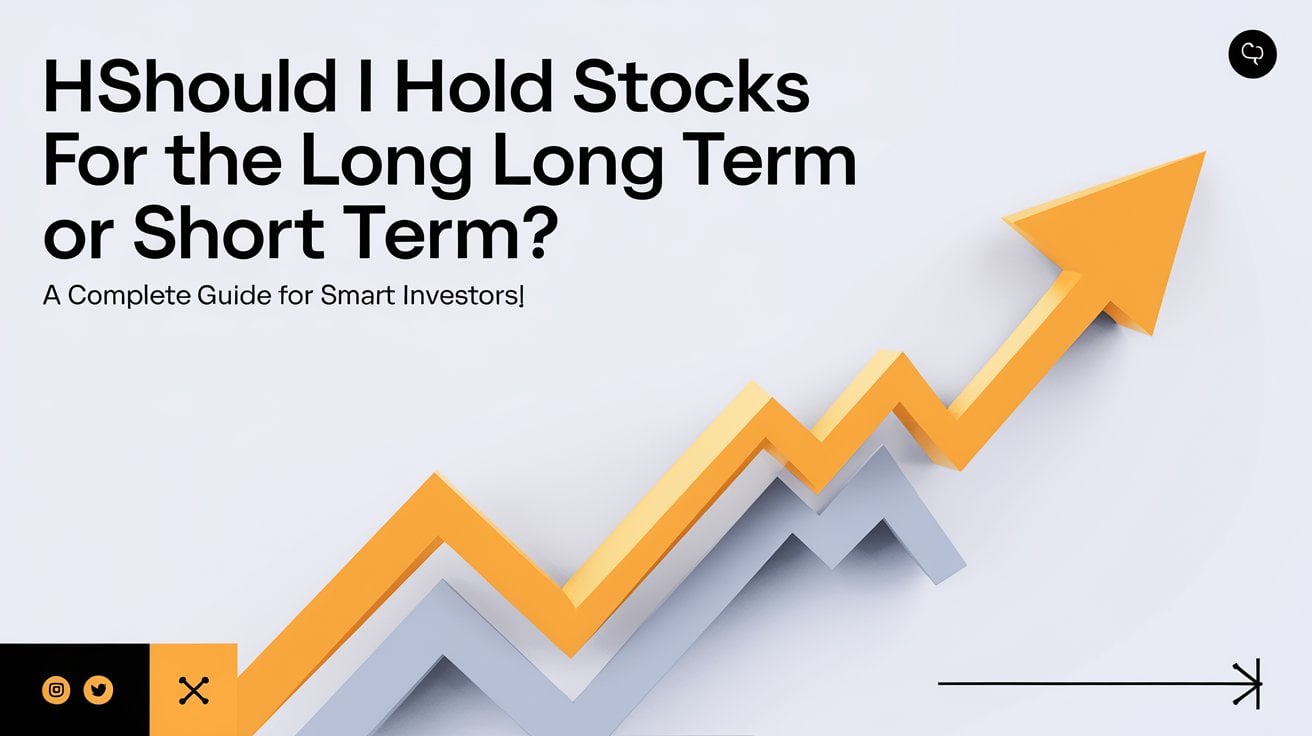
Should I Hold Stocks for the Long Term or Short Term? A Complete Guide for Smart Investors
Investing in the stock market can be one of the most effective ways to build wealth over time. However, many investors—especially beginners—face a common dilemma: should they hold stocks for the long term or focus on short-term gains? Choosing the right approach can significantly impact your portfolio’s growth, risk exposure, and overall investment experience.
This guide will break down the benefits, risks, and strategies of both long-term and short-term stock investing. By the end, you’ll have the knowledge to make informed decisions that align with your financial goals, risk tolerance, and investment style.
Understanding Long-Term vs Short-Term Stock Investing
To decide whether to hold stocks for the long term or short term, you first need to understand the difference:
- Long-Term Investing: Buying stocks with the intent of holding them for years or even decades. The focus is on growth, compounding, and weathering market fluctuations over time.
- Short-Term Investing: Holding stocks for days, weeks, or months to capitalize on price movements. Short-term traders aim for quick profits rather than long-term growth.
The investment horizon directly affects risk, potential returns, and tax obligations. Understanding these differences is crucial for crafting a strategy that fits your financial plan.
Benefits of Long-Term Stock Holding
Long-term investing is often recommended for beginners and risk-averse investors because it provides several advantages:
- Compounding Growth: Reinvesting dividends and returns over time allows your investments to grow exponentially.
- Lower Taxes: Long-term capital gains are typically taxed at a lower rate than short-term gains.
- Reduced Stress: Holding investments long-term reduces the need to monitor market fluctuations daily.
- Lower Costs: Fewer trades mean fewer transaction fees and commissions.
Historical data shows that long-term investors benefit from the overall upward trend of the stock market. For example, the S&P 500 has delivered an average annual return of around 10% over the past century.
Risks of Long-Term Investing
While long-term investing has many benefits, it is not without risks:
- Market Volatility: Stock prices fluctuate over time, and long-term investors must withstand temporary declines.
- Inflation Risk: Over decades, inflation can erode the real value of returns if not accounted for.
- Company-Specific Risk: Even solid companies can experience declines due to poor management, competition, or industry disruption.
Despite these risks, historical evidence shows that patient, long-term investors often recover from short-term losses and benefit from sustained growth.
Benefits of Short-Term Stock Trading
Short-term trading can be attractive for investors seeking faster returns or more flexibility:
- Quick Profits: Traders can capitalize on market trends, volatility, and momentum.
- Liquidity: Short-term investments can be sold quickly, providing access to cash when needed.
- Active Control: Traders can adjust positions frequently based on market developments.
Short-term trading strategies include day trading, swing trading, and momentum trading. When executed well, these strategies can produce significant returns in a short period.
Risks of Short-Term Trading
Short-term trading also carries notable risks that beginners must understand:
- High Transaction Costs: Frequent trades increase brokerage fees and other costs.
- Higher Taxes: Short-term capital gains are taxed at ordinary income rates, which can be significantly higher.
- Emotional Pressure: Quick decision-making can lead to impulsive trades based on fear or excitement.
- Greater Risk Exposure: Rapid price changes can result in significant losses if not managed carefully.
Because of these challenges, short-term trading is generally better suited for experienced investors or those who can dedicate substantial time to market analysis.
How to Determine Your Investment Goals
Your investment goals play a central role in deciding whether to hold stocks long-term or short-term:
- Retirement Planning: Long-term investing is ideal for building a retirement portfolio over decades.
- Wealth Accumulation: A mix of long-term growth and selective short-term trades can help grow capital steadily.
- Immediate Needs or Opportunities: Short-term trading can provide liquidity or quick gains but requires careful planning.
Assessing your risk tolerance, timeline, and financial objectives will help determine which strategy is best for your unique situation.
Tax Implications: Long-Term vs Short-Term Gains
Taxes are a key factor that differentiates long-term and short-term stock holding:
- Long-Term Capital Gains: Profits from stocks held over a year are taxed at a lower rate, usually 0–20% depending on income.
- Short-Term Capital Gains: Profits from stocks held less than a year are taxed at ordinary income rates, which can be significantly higher.
- Tax Planning: Investors can use tax-advantaged accounts such as IRAs, 401(k)s, or HSA accounts to defer or reduce taxes.
Understanding these tax implications can influence your decision to hold stocks long-term or focus on short-term trades.
Psychological Factors in Holding Stocks
Investor psychology plays a significant role in both short-term and long-term strategies:
- Emotional Trading: Fear and greed can lead to panic selling or impulsive buying.
- Behavioral Biases: Loss aversion, overconfidence, and the fear of missing out (FOMO) affect decision-making.
- Staying Disciplined: Developing a plan and sticking to it prevents emotional reactions from harming your portfolio.
Long-term investors typically benefit from avoiding emotional decisions, while short-term traders must develop strong discipline to execute trades effectively.
Market Trends and Timing Considerations
Timing the market is challenging, especially for short-term traders:
- Short-Term Market Timing: Predicting short-term price movements can be risky and often leads to losses.
- Long-Term Dollar-Cost Averaging: Investing fixed amounts periodically smooths out market volatility and reduces risk.
- Case Studies: Historical analysis shows that consistent, long-term investment outperforms frequent attempts to time the market.
Understanding market behavior helps investors choose a strategy that aligns with their skill level and risk tolerance.
Strategies for Long-Term Investors
Long-term investors can adopt strategies that maximize growth while managing risk:
- Buy-and-Hold Approach: Focus on high-quality companies or diversified ETFs and hold them through market cycles.
- Diversification: Spread investments across sectors, asset classes, and geographies.
- Dividend Reinvestment: Automatically reinvesting dividends accelerates compounding growth.
- Index Funds and ETFs: Low-cost options that provide market exposure and reduce individual stock risk.
These strategies support steady, predictable growth and reduce stress compared to short-term trading.
Strategies for Short-Term Investors
Short-term investors require different approaches:
- Swing Trading: Holding stocks for days or weeks to capture short-term trends.
- Day Trading: Buying and selling within a single day to exploit market volatility.
- Technical Analysis: Using charts, moving averages, and indicators to identify entry and exit points.
- Risk Management: Stop-loss orders, position sizing, and diversification to mitigate losses.
Short-term strategies demand constant monitoring and quick decision-making to succeed.
Combining Long-Term and Short-Term Approaches
A hybrid strategy can balance stability and opportunity:
- Core-Satellite Portfolio: Maintain a long-term core of diversified holdings while using a smaller portion for short-term trades.
- Benefits: Provides growth potential and liquidity while minimizing risk.
- Portfolio Example: 80% in long-term ETFs and dividend stocks, 20% in short-term trading opportunities.
This approach suits investors who want exposure to market opportunities without risking their long-term financial security.
Monitoring and Reviewing Your Investments
Regardless of strategy, ongoing portfolio management is essential:
- Regular Check-Ins: Review portfolio performance monthly, quarterly, or annually.
- Adjustments: Rebalance holdings based on performance, changing goals, or market conditions.
- Avoid Overreaction: Focus on long-term trends rather than short-term volatility.
- Tools: Use portfolio trackers, financial apps, or spreadsheets to monitor investments.
Consistent monitoring ensures your strategy remains aligned with your objectives.
Evaluating Your Risk Tolerance
- Definition: Risk tolerance is your ability and willingness to endure losses or volatility in your investments.
- Importance: Determines whether a long-term or short-term strategy fits your personality and goals.
- Assessment Tools: Online risk questionnaires, consultation with financial advisors, or reviewing past reactions to market changes.
- Practical Tip: Conservative investors often benefit from long-term holding, while aggressive investors may explore short-term trades.
Understanding Market Volatility
- Market Volatility: Price fluctuations over short or long periods.
- Impact on Long-Term Investors: Temporary declines can cause anxiety but are often recovered over years.
- Impact on Short-Term Investors: Can be profitable but also risky if positions are not carefully managed.
- Strategy: Use volatility to your advantage in short-term trades, while long-term investors focus on fundamentals.
The Role of Diversification in Time-Based Investing
- Definition: Spreading investments across multiple assets, sectors, and geographies.
- Long-Term Focus: Reduces the impact of any single company’s poor performance on overall returns.
- Short-Term Focus: Even traders benefit from diversifying positions to manage risk.
- Example: Combining ETFs, dividend stocks, and blue-chip companies for long-term stability, plus small-cap or tech stocks for short-term gains.
Dividend Stocks and Passive Income
- Long-Term Benefit: Holding dividend-paying stocks creates a stream of passive income that can be reinvested to accelerate compounding.
- Short-Term Use: Traders may capture ex-dividend dates for temporary income but need to be cautious of price drops.
- Practical Advice: Dividend reinvestment plans (DRIPs) work best for long-term investors seeking wealth growth.
Importance of Portfolio Rebalancing
- Definition: Adjusting your portfolio to maintain desired asset allocation over time.
- Long-Term Investors: Rebalance annually or semi-annually to maintain risk levels.
- Short-Term Investors: Adjust positions more frequently based on trends and market shifts.
- Benefit: Keeps portfolio aligned with goals and prevents overexposure to risk.
Leveraging Technology for Investment Decisions
- Tools for Long-Term Investors: Robo-advisors, ETFs, and automated investment platforms simplify portfolio management.
- Tools for Short-Term Traders: Real-time trading platforms, charting software, and alerts help identify entry and exit points.
- Advice: Beginners should start with long-term tools before exploring advanced short-term trading platforms.
Avoiding Emotional Pitfalls in Investing
- Long-Term Investors: Avoid panic selling during market downturns; focus on fundamentals.
- Short-Term Traders: Avoid chasing trends or overtrading due to fear of missing out.
- Techniques: Predefined entry/exit points, stop-loss orders, and strict adherence to investment rules.
- Benefit: Emotional discipline improves decision-making and preserves capital.
Case Studies: Long-Term vs Short-Term Performance
- Long-Term Example: Holding S&P 500 index funds over 20 years shows consistent growth despite short-term dips.
- Short-Term Example: Swing trading during volatile periods can yield profits but also losses if trades are mistimed.
- Lesson: Long-term holding provides stability and compound growth, while short-term strategies require skill, time, and risk management.
- Visual Aid Suggestion: Include a chart comparing 10-year S&P 500 returns vs hypothetical short-term trades.
Conclusion and Call to Action
Choosing between long-term and short-term stock holding depends on your financial goals, risk tolerance, and time commitment. Long-term investing provides stability, compounding growth, and lower taxes, while short-term trading offers flexibility and potential for quick profits—but with higher risks and costs.
By evaluating your risk tolerance, understanding volatility, diversifying your portfolio, leveraging dividend income, using technology, and learning from past performance, you can create a strategy tailored to your personal circumstances. Many successful investors adopt a hybrid approach, combining core long-term holdings with smaller short-term positions to balance growth and opportunity.
Start today by assessing your goals, building a diversified portfolio, and committing to disciplined investing. Track your progress, adjust when necessary, and embrace continuous learning to grow your wealth over time.